Funny How Time Flies: December 2025

This is the final edition of the Big Issue this year. And while I’m glad I’ll have the usual January off from publishing, this year’s listicles are going to be pure hell to write.
Oh, no, not because it’s hard to find anything good. The opposite actually. Whittling the lists down probably should have started in May… of last year.
The Listen List
An update about what’s out now and what people around the internet are talking about
November
Happiness Is Going to Get You by Allie X - alt-pop
Mercy by Armand Hammer - abstract hip hop
In the Earth Again by Chat Pile & Hayden Pedigo - post-rock
Stardust by Danny Brown - experimental hip hop
Cabin in the Sky by De La Soul - jazz rap
EUSEXUA Afterglow by FKA Twigs - electronic dance music (and shockingly a whole new album, not just remixes like I originally thought)
gutta child by Gabriel Jacoby - contemporary r&b
DOGA by Juana Molina - ambient pop
sorry i thought you were someone else by K-LONE - microhouse
hooke’s law by keiyaA - alternative r&b
**Sad and Beautiful World by Mavis Staples - country soul
goodbye, world! by miffle - tape music
The Sword & the Soaring by Navy Blue - drumless
**Tranquilizer by Oneohtrix Point Never - progressive electronic
**LUX by Rosalia - art pop
Balloon Balloon Balloon by Sharp Pins - psychedelic pop
How You Been by SML - nu jazz
Out the Blue by WNC WhopBezzy & 7th Street Carlos - jigg
** must-listen
The Rewind
A look back at a favorite from (at least five) years past
This was going to be a whole big deal about Kate Bush’s The Hounds of Love, but then pop culture had to go and ruin my idea by making her super popular again, so every weekender demi-critic has done rewinds and “first listens” and deep dives. So, I will forgo my spiel about the greatest album of the 1980’s and go with something equally as greatest, but less discussed.
But first: a look back on all those 10-, 15-, 20-, and so on-year anniversaries I just straight up didn’t have the time or wherewithal to dive into…
Courtney Barnett’s Sometimes I Sit and Think, and Sometimes I Just Sit; Shamir’s Ratchet; Lightning Bolt’s Fantasy Empire; Protomartyr’s The Agent Intellect; Janelle Monae’s The Arch Android; LCD Soundsystem’s This Is Happening; Robyn’s Body Talk; Caribou’s Swim; Twin Shadow’s Forget; Wavves’ King of the Beach; Women’s Public Strain, Sufan Stevens’ The Age of Adz and Illinois; Gorillaz’s Demon Days; Queens of the Stone Age’s Rated R and Lullabies to Paralyze; Ladytron’s The Witching Hour; Peaches’ The Teaches of Peaches; Depeche Mode’s Violator, The Jesus and Mary Chain’s Psychocandy; New Order’s Low Life; Eurythmics’ Be Yourself Tonight
and, of course, the biggest missed opportunity of all:
“Weird” Al Yankovic’s Dare to Be Stupid
That said, I think everyone already knows this album, even though you probably didn’t know all those songs came off the same album. Well, I’m here to tell you, yes they did.
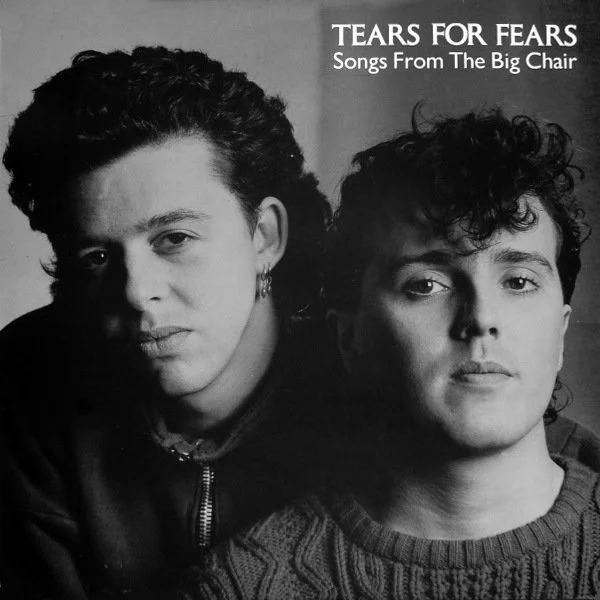
Songs from the Big Chair
Tears for Fears
Synthpop | 1985
I think a lot of 80’s bands, for a really large portion of my life at least, have gotten the kind of butt-of-the-joke “what a zany, weird aesthetic” treatment in popular culture. From Disney Channel sitcoms to adult animation, a ton of artists were rolled into “The 80’s” along with fluorescent prints, shoulder pads, cocaine in toilet stalls, and everyone sounding like Duran Duran and Human League. Bleep bloop, neon and computer noises.
Well, for starters, both those bands’ best work is legitimately radical. Rio is as chock full of hits as it is crazy sonic experiments, and Dare literally redefined what people could do with synthesizers.
But for my main point, I’m glad to say that, thanks to the likes of deep-dive musicologists and the Duffer Brothers, the decade’s music and art are finally being given the reappraisal and critical acclaim that they deserve, even if it is 40 years late. Exhibit number one is our subject today.
My recollection of Tears for Fears’ cultural impact from growing up in the 90’s and 2000’s was “glittery synth pop band to be confused with all the others” and sometimes “Shout” would play on classic rock radio because the album-length version actually has a pretty sick guitar part in it.
It has only been in the past five years that they’ve reappeared in the public consciousness as some of the forgotten geniuses of an era that was long written off as vapid and empty purely based on stereotypes and vibes. So, I guess, this extremely long introduction exists to say that I will no longer allow Tears for Fears to be maligned and/or sidelined just because they used lots of keyboards in a specific decade. Kraftwerk used a lot a keyboards in the 70’s and everyone creams their pants, but do it in the 80’s and suddenly you’re just indistinguishable from Flock of Seagulls.
NO MORE!
The album begins with the aforementioned “Shout”, its iconic triangle and cowbell opening percussion line ringing out before maybe the greatest vocal production in history begins the chorus. Tears for Fears has two (permanent) members: Roland Orzabal and Curt Smith; and both members sing lead vocals at various times. One would be forgiven for not knowing that, as they have very, very similar singing voices. But here, in the opening chorus of “Shout,” they are both singing, double-tracked so well that it sounds like one person’s single-tracked voice with a tiny bit of reverb.
Orzabal’s lyrics in the verses are very much political, even as they have the surface of a more non-sensical take, pleading for you to not compromise your morals for the state, “jump for joy” for the sake of corporations that hire you, and in the final verse, in a line that seems all too relevant today, likens changing someone’s mind to breaking their heart—it’s that difficult to do and it feels that hurtful. His delivery of the verses is so emotional and powerful, his voice begins to break.
Musically, “Shout” is one of the richest palettes in the decade. When the verses first come in, there’s a bevy of layered synthetic woodwinds that have this…too-synth-to-be-real/too-real-to-be-unfelt vibe, as they peal back and forth from left to right. And the drum pattern is a bouquet of jazz, industrial, and four-on-the-floor dance, with that mindblowing, so-simple-its-genius triangle/cowbell running throughout. What a blowout track to open with!
The second track would give listeners a taste of what sound Tears for Fears would explore throughout their next album following Songs from the Big Chair. “The Working Hour” opens with a saxophone flourish and solo, before tracking hand percussion, live piano, and Collins-esque drums in its wake. The introduction is almost two minutes before Orazabal opens his first line.
The song heavily dwells on his and Curt Smith’s realization that, with the success of their first album, The Hurting, and both “Mad World” and “Pale Shelter” singles, they were now—to their label at least—simply a product to be sold, not artists with something to say or show. He reaches the height of his register to teach them not to make that assumption again (“We are paid by those who learn from our mistakes”).
Maybe the most famous song of the mid-New-Wave-80’s, “Everybody Wants to Rule the World” opens with an entirely too famous bubbly, descending synth line. (Why am I explaining this, you have for certain heard this song, it’s one of the most-played, most-licensed songs in history.) The guitar line, the 10cc-style synth vocals, all iconic. Curt Smith leads this track, singing about finding and growing into your own person in a world filled with Orwelian pressures to conform to societal norms.
The track stands out on the album, not only because of its immediate pop sensibilities, but also for it’s shuffling, jazz drum track that’s almost a sore thumb against the square-shaped, mechanically precise beats of the other songs. Other musical highlights include the spray of acoustic guitar hidden behind the first downbeat of each line of the chorus; the winking repeat of that opening synth descent in between lines one and two of the second verse: it’s the exact same notes, but buried behind the other instruments in a haze of reverb, it almost feels like an entirely different little ditty; and that kick-ass rock guitar backing the bridge.
Everything about “Everybody Wants to Rule the World” is so perfectly sculpted and crafted, it’s a shock to find out that it was almost on the cutting room floor. Orzabal and Smith found it to be too different from the rest of the album, and considered scrapping it. Which, when we get into the next song, you’ll realize how different it really is.
“Mother’s Talk” is the closest thing to an EBM track that any “80’s” synthpop band would get. It’s full of dark, nearly-random synth patterns that feel more at place on the Terminator 2 score. And those drums! Dear gods, they’re likely to cave your chest in. Combine these with the occasional guitar stab and the half-jump-scare-half-Bond-score electronic string arrangements and you have a darkwave, goth dance club hit in the making.
The lyrical subject matter is equally heavy, mashing the conflicting messages from mothers raising their children with those of cold war propaganda (“mother” governments raising their citizen “children”). Orzabal has said that his opening line, “my features form with a change in the weather,” is a grotesque play on the stereotypical mom line “your face will get stuck like that” when you make a face combined with people being “flash-frozen” in place by nuclear blasts: “when the weather starts to burn / then you’ll know that you’re in trouble.”
The first side of the album ends here, with the drums going full tilt and Smith’s drum blasting random chords over the din as it all echoes into the silence.
The second side opens with what I can only call a lounge singer version of Tears for Fears, with the track “I Believe.” It is a simple, bare track of Orzabal singing over piano, with a light jazz drum far in the background. The track’s spare instrumentation is used to highlight the lyrical depth, as he explores on of the group’s favorite themes: the healing power of self-discovery. The process may be painful at times, but the result is always worth it.
Following quickly on “I Believe”s heels is “Broken,” a short-lived track for this album at only two-and-a-half minutes, and mostly instrumental. But what and instrumental! A full-on guitar solo over a pounding, racing drum and bass beat and bleeds out through your speakers before careening into Orzabal’s lyrics. Those synth flutes fulttering around like Akira motorcycle-crashed into Le Sacre du Printemps. Lyrically, it’s all a set-up for the next song, one that, I’ll warn you now, it maybe my favorite song in the whole world.
“Head Over Heels” is the greatest song I’ve ever heard. I say things are great, or “one of the greatest” a lot on this site, but this is not hyperbole. I firmly believe that this is the greatest song ever written. Opening with that instantly recognizable piano line, which is then backed by flurrying synths that sound like butterflies surrounding you. Then that crisp, clear electric guitar that marries the lead notes in the piano? Chef’s kiss.
The first verse alone is a masterpiece. The piano morphs into synths so subtly you’ll miss it if you’re not intently listening for it, as well as from a major to minor, that gives every line Orzabal sings a hint of melancholy. And what a vocal performance: that first line, “I wanted to be” descending before jumping all the way to his falsetto “with you alone,” forms a knot in my stomach. The following line doing even wilder jumps with “but traditions I can trace” then super low “a-,” back center, “-gainst,” back super low “the,” back to high falsetto “child in your face,” is like watching a high-wire 10,000 feet up.
Meanwhile, Smith’s bass is bouncing and bopping all over the place, while maintaining one of the smoothest walking lines I’ve ever heard. Then the violin string plucks after the second line of the verse send chills through you, and may be the closest I’ve ever had to an ASMR experience. When Orzabal enters with that glorious chorus, the once-syncopated synth chords of the verse turn into long, wanting drones, mirroring his longing for love. In the middle of the second line (“I never find out, ‘til I’m head over heels”), there’s this subtle guitar and piano duet that falls along side Orzabal’s hope for this hypothetical relationship.
And then—I’m sorry, but this moment could be an entire essay itself. Then, as he’s wrapping up the chorus (“don’t take my heart, don’t break my heart, don’t throw it away”), this long, guttural, air-raid horn drone begins and just ramps up right through the roof of the place before turning into it’s own set of synth-trumpets blasting the clarion call to get your ass down here and listen to this song already.
Orzabal’s remaining lines are perhaps the most self-reflective ever put to song: “I made a fire and, watching it burn / I thought of your future / With one foot in the past, now just how long will it last?” His interplay with Smith’s backing vocals in the second line are even more probing: “My mother and my brother’s used to breathing clean air / Nothing ever changes when you’re acting your age / And dreaming I’m a doctor / Nothing gets done when you feel like a baby / It’s hard to be a man when there’s a gun in your hand / Nothing ever changes when you’re acting your age.”
After a quick drum breakdown, run through a million filters, that walking bass line returns to compliment the electric guitar and clear piano from the intro section as Orzabal and Smith lead a full choir in a glorious, wordless chant that might as well be a football club anthem. Eventually, however, all good things must come to an end, and Orzabal wraps up with the line that titles this issue, “in my mind’s eye / … / funny how time flies.”
We’re led, via a blink-and-you’ll-miss-it reprise of “Broken,” into Tears for Fears’ forgotten opus, “Listen,” a beautiful, lyrical, and hearbreaking anthem. The music is just to-die-for gorgeous as Yanni-esque synth palettes wash over your ears from every direction, filling every audible space with eerily beguiling chords and glissandos. It is a mostly instrumental track save for a few poignant lines from Smith regarding the then current state of the cold war (referencing the suffering of the Russian people, and the perhaps-overdoing-it-a-bit United States), before dropping into the final three-minute stretch. A nonsensical chant is backed by sumptuous, resplendent, synth washes and massive bangs of drum that sound more like towering waves crashing on some empty, distant shore. I am not ashamed to say, this sound is so astonishingly wondrous that is has made me cry in awe.
I have always been a massive fan of what, in the 70’s they would have called “computer music.” It has gone by many names and inhabited many spaces since, but there is no doubt that the utter mastery of sound by synthesizer and drum machine that is on display here is something more than special. This is the gateway to another realm of artistic expression. Another realm of creation.
Tears for Fears have fortunately never suffered the point-and-laugh fate of many of the one-hit-wonder 80’s bands (especially since, you know, they had more than one hit), but the sound of Songs from the Big Chair is still very much of the time: the synthetic woodwinds and trumpets particularly wouldn’t be out of place on a Mannheim Steamroller album; and as such, they were kept in the filing cabinet of groups that had their moment and then lost their place the same instant shoulder pads did.
But any musician will tell you, it’s not the instrument, but what you do with it. Through their first album, and then certainly through this one, Tears for Fears dominated sound, made it bend to their whims, and used it to create a masterpiece the likes of which was never replicated by any other act in the decade. A synthpop album that had head-scratching philosophy, a million influences on its sleeve, and flashes from disparate genres yet to fully form: industrial, adult contemporary, sound collage.
That Roland Orzabal and Curt Smith were able to take this leviathan of material and turn out even one chartable song—much less the multiple Top 10’s it actually produced—is a miracle of creative fortitude that will likely never be equalled. I hope the world can one day accept, accommodate, and deserve such a rarity as this, a perfect album.
Now Playing
A quick look at my personal favorite recent release

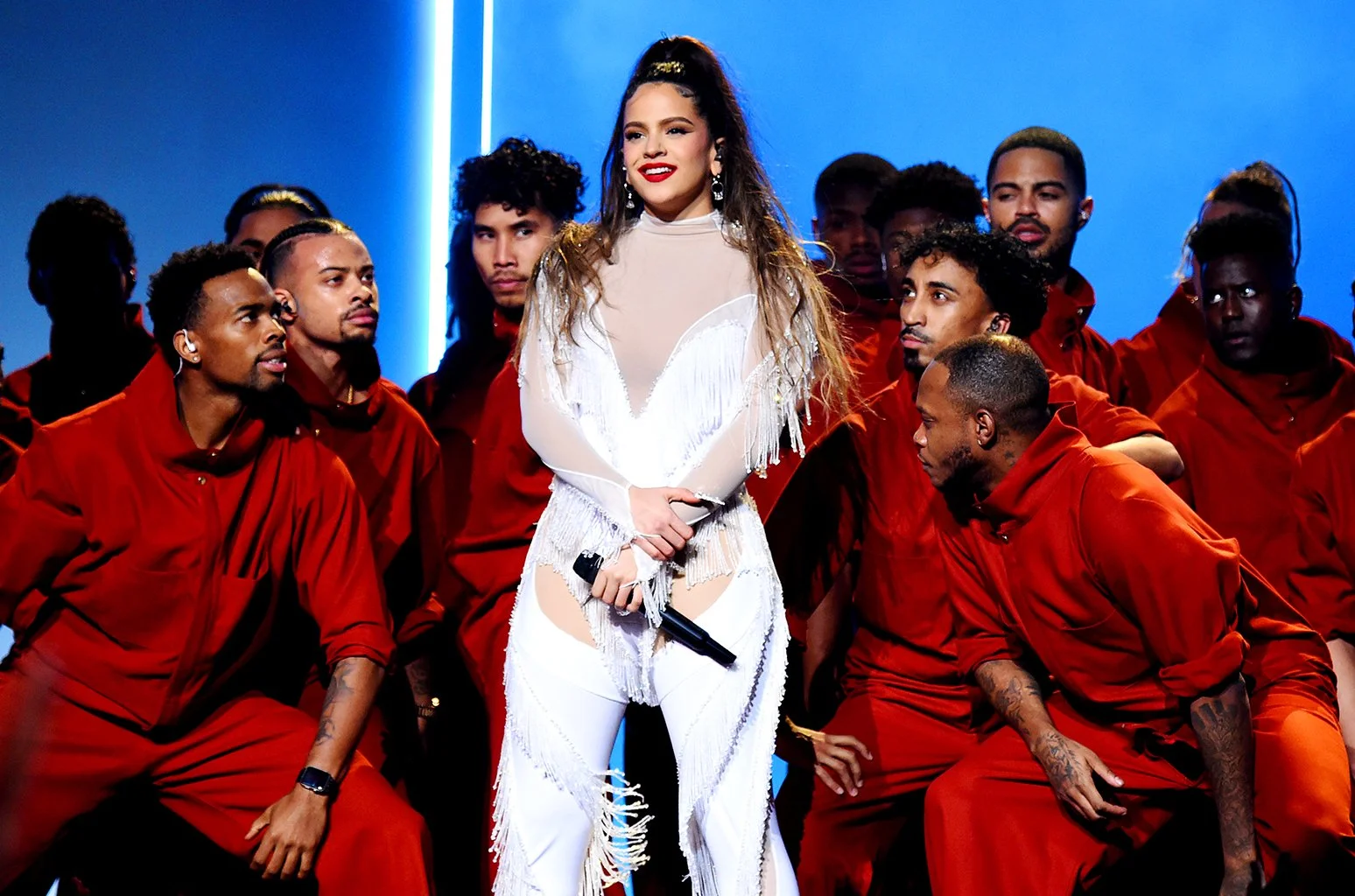
LUX
Rosalía
Art Pop
LUX already feels like a potential turning point in pop music: accessible yet defiantly challenging, sounding unlike anything else in the mainstream. Its originality may initially alienate some listeners, but those willing to surrender to its overwhelming sweep will find a singular, dazzling experience that confirms Rosalía as one of the most visionary artists working today. Purists can debate genre labels all they like; the rest of us can simply revel in what may be the year’s best album.
It’s an astonishing record that routinely stops you in your tracks, building a rich, immersive world while still echoing Rosalía’s earlier sounds. You don’t need to unravel every conceptual thread to be moved, when every song is uniformly beautiful and charged with striking moments and emotional clarity. But the album does ask for your full attention, trading pop immediacy for something deeper: a maximalist, transformative journey that rewards patience with moments of near-transcendence.
Across its journey, LUX shifts from the personal to the philosophical. “De Madrugá” closes the intimate first half in a surge of nocturnal intensity, while “Dios Es un Stalker” opens the second half with an alluring blend of the sacred and profane. Modern touches appear sparingly but meaningfully, never as gimmicks, always reinforcing the album’s carefully constructed vision.
Unlike the dopamine rush of MOTOMAMI, LUX offers richer emotional returns. Rosalía treats classical music and opera not as rigid traditions but as a playground, folding their grandeur into pop’s expressive reach. At times, the record risks collapsing beneath its own ambition—sweeping strings, choirs, flamenco rhythms, thunderous percussion—but it always remains remarkably nimble. Fearless, lavish, and utterly absorbing, LUX may be a demanding listen, but it is one that ultimately delivers profound, divine rewards.
Up Next
What’s coming out in the next few weeks?
December will see our year-end wrap-ups, but there’s still a few albums coming out to be excited about:
HEALTH - CONFLICT DLC
Hercules & Love Affair - Someone Else Is Calling
Jane Remover - ♡
Nas & DJ Premier - Light-Years
Well, what releases did I miss? What’s coming out soon that you can’t wait for?
And as always, release the Epstein files.
I mean… Happy listening!